 Summarize in ChatGPT
Table of Contents
- What Is a Digital Marketing Checklist?
- 1. Start With the Strategy, Not the Channel
- 2. Look at What Happens After Someone Reaches Your Website
- 3. Make Sure Your SEO Is Attracting the Right People
- 4. Local Businesses Need to Think Beyond Traditional Rankings
- 5. Content Should Have a Reason to Exist
- 6. Search Is Expanding Beyond the Traditional Google Results Page
- 7. Google AI Overviews Are Worth Watching, but Don’t Chase Shortcuts
- 8. Think About ChatGPT Visibility as Part of Your Wider Brand Presence
- 9. Google Ads Should Be Judged by What Happens After the Click
- 10. Social Media Needs a Clear Role
- 11. Don’t Stop Marketing the Moment Someone Becomes a Lead
- 12. Fix Your Measurement Before Increasing Your Budget
- 13. Authority Is Built Outside Your Website Too
- 14. Look at Marketing as One Connected System
- Where Should You Start?
- Digital Marketing in 2026 Is About Connections
- Frequently Asked Questions About Digital Marketing Checklists
- Use This as Your Starting Point
Digital marketing is no longer a collection of separate channels.
A potential customer might find your business through Google, see one of your posts on LinkedIn a few days later, read reviews, ask ChatGPT about companies in your industry and eventually return through a paid ad before making contact.
From the customer’s point of view, all of those interactions belong to the same journey.
That is why reviewing SEO, advertising, social media and content separately can sometimes give you the wrong picture.
Your SEO might be generating plenty of traffic, but the website may not be turning that traffic into enquiries.
Your Google Ads campaigns might be generating leads, but poor tracking could make it difficult to know which ones actually become customers.
Your social channels may look active without contributing much to the business.
And as search behaviour changes, you may also need to think about how your company appears in AI-powered search experiences alongside traditional Google results.
This digital marketing checklist is designed to help you look at the bigger picture.
Rather than giving you hundreds of boxes to tick, it focuses on the areas worth reviewing and explains why each one matters.
Where a subject deserves a deeper look, we’ll point you toward a more detailed resource.
What Is a Digital Marketing Checklist?
A digital marketing checklist is simply a structured way to review the main parts of your online marketing.
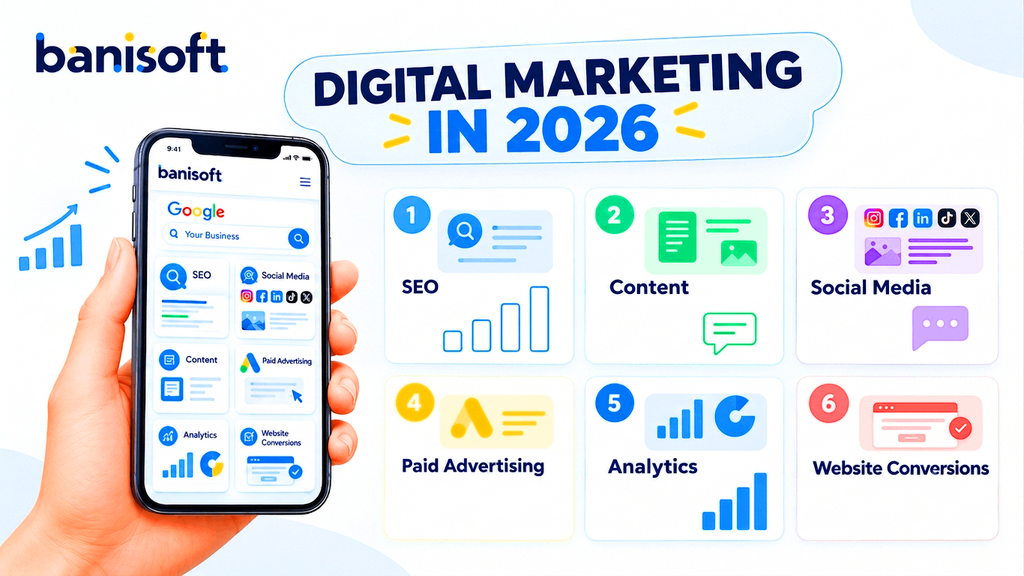
Depending on the business, that might include SEO, paid advertising, content, local search, social media, email, website conversions, analytics and newer areas such as AI search visibility.
The point is not to make sure you are using every possible marketing channel.
A business can be active on five different platforms and still have a weak marketing system.
What matters is whether the channels you do use are helping the right people discover your company, understand what you offer and eventually become customers.
For a more detailed review of your entire setup, a digital marketing audit checklist can help you look at each channel in greater depth.
1. Start With the Strategy, Not the Channel
Before deciding whether you need more SEO, Google Ads or social media activity, step back and ask what marketing is actually supposed to achieve.
That sounds obvious, but it is where many businesses go wrong. One company may need more qualified sales opportunities. Another may want to increase ecommerce revenue. A local service business may care mainly about phone calls and bookings, while a B2B company may need to build a pipeline that develops over several months.
Those businesses should not be measuring marketing in the same way.
Traffic, rankings, impressions and followers can all be useful indicators, but they do not automatically mean your marketing is working.
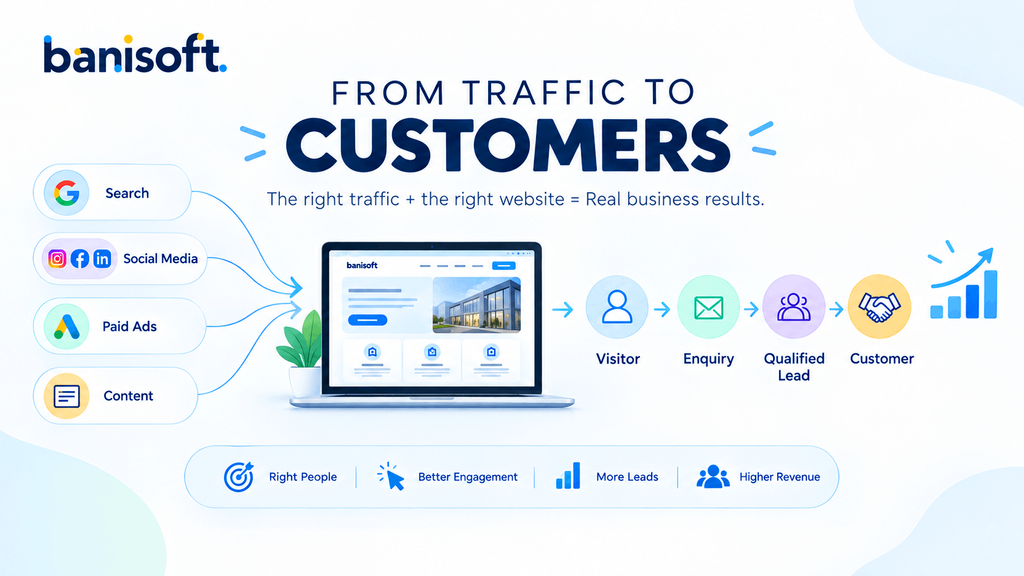
The more important question is what happens after someone sees or clicks your marketing.
– Do they fit the type of customer you want?
– Do they take the next step?
– Do those leads eventually become customers?
A clear strategy gives you a way to connect marketing activity with business results instead of treating activity itself as success.
If that connection is missing, it is worth working through a digital marketing strategy checklist before increasing your budget or adding another channel.
2. Look at What Happens After Someone Reaches Your Website
Most marketing channels eventually send people to your website.
That makes the website one of the most important parts of the entire system.
A visitor should be able to quickly understand what your business does, who you help and what they should do next.
If the page is confusing, slow or difficult to use on a phone, even good marketing can struggle to produce results.
This is particularly important when businesses focus heavily on getting more traffic.
More visitors do not solve a conversion problem. They simply send more people into the same experience.
Sometimes a relatively small improvement to messaging, navigation, calls to action or forms can make existing traffic far more valuable.
That is where conversion rate optimisation comes in.
If your website is attracting visitors but not enough of them are becoming leads or customers, a conversion rate optimisation checklist is a better next step than simply trying to generate more traffic.
3. Make Sure Your SEO Is Attracting the Right People
SEO is still one of the most important ways people discover businesses when they are actively searching for information, services or products.
But good SEO is no longer about putting a keyword in a page title and repeating it throughout the copy.
Search engines need to understand what a page is about, how it relates to the rest of your website and whether it actually answers what the searcher was looking for.
That means SEO involves a mix of keyword research, search intent, technical performance, on-page optimisation, internal linking, content quality and authority.
It is also worth looking beyond traffic.
A website attracting 20,000 informational visitors each month is not necessarily in a better position than one attracting 5,000 visitors who are much closer to making a purchase.
The right search traffic matters more than traffic for its own sake.
Your SEO checklist should help you review the overall picture, from technical health and content to rankings and conversions.
If you later find that a particular area is causing problems, subjects such as technical SEO, keyword research or internal linking can be explored separately without trying to squeeze all of that detail into this one guide.
4. Local Businesses Need to Think Beyond Traditional Rankings
For businesses that depend on customers from a specific city or service area, local search deserves its own attention.
Someone looking for a dentist, accountant, restaurant, contractor or physiotherapist may interact with Google Maps before they ever reach the normal search results.
That changes what matters.
Your website is still important, but so are your Google Business Profile, reviews, business information, location pages and the wider signals that connect your company with a particular place.
This becomes even more important for businesses with several locations.
Each location needs to be clear enough for both customers and search engines to understand what is offered there and where the business actually operates.
If local visibility contributes directly to leads or appointments, use a local SEO checklist to review the complete setup rather than looking only at your website rankings.
A separate Google Business Profile guide can then go deeper into profile optimisation if that turns out to be one of the weaker areas.
5. Content Should Have a Reason to Exist
Publishing content regularly is not the same as having a content strategy.
Every useful piece of content should have a purpose.
Some articles help people discover your company through search.
Others answer questions that come up during a sales conversation.
Some demonstrate expertise.
Others help customers compare options or understand a complicated decision.
Strong content strategies usually combine these different roles rather than publishing whatever topic happens to be available that month.
It also helps to think in groups of related topics.
For example, this article introduces the broader subject of digital marketing, while separate resources can go much deeper into SEO, Google Ads, local search, social media and AI search.
That approach is often called a topic cluster.
The pillar gives readers the broader picture. Supporting articles provide the detail when they need it.
If you are publishing regularly but are unsure whether the content is actually helping your marketing, a content marketing checklist is a useful place to start.
6. Search Is Expanding Beyond the Traditional Google Results Page
One of the biggest changes in digital marketing is that people now have more ways to research a company.
Google Search remains important, but customers may also interact with AI Overviews, ChatGPT and other AI-powered tools while comparing products, services or providers.
That does not mean traditional SEO has suddenly stopped working.
In many ways, the same fundamentals still matter: useful content, clear expertise, a technically accessible website and enough context for search systems to understand what your company is about.
What has changed is the number of places where that information may be surfaced.
This makes it more important for businesses to think about whether their online presence clearly answers basic questions:
Who are you?
What do you specialise in?
Why should your information be trusted?
Does the rest of the web support what you say about yourself?
These questions sit at the heart of AI search optimisation.
If this is an area you are starting to explore, an AI search optimisation checklist can provide a more detailed framework without turning this general guide into a technical AI-search article.
7. Google AI Overviews Are Worth Watching, but Don’t Chase Shortcuts
Google AI Overviews have changed the appearance of many search results and the way users interact with information.
That naturally creates pressure for marketers to find a new ranking formula.
The better approach is to avoid chasing tricks.
Pages still need to be useful, accessible and trustworthy. Search engines still need enough context to understand the content. And original information continues to be much more valuable than another generic summary of something already covered hundreds of times.
For businesses creating content, that can mean adding things competitors cannot easily reproduce:
First-hand experience.
Original examples.
Real data.
Expert commentary.
Useful comparisons.
Detailed explanations based on actual work.
These are not only useful for AI search. They generally make the content better for people as well.
If appearing in these results is becoming important to your business, a dedicated Google AI Overview ranking checklist can go deeper into the factors worth reviewing.
8. Think About ChatGPT Visibility as Part of Your Wider Brand Presence
More businesses are now asking how they can appear when someone uses ChatGPT to research companies or ask for recommendations.
It is tempting to treat that as another traditional ranking problem, but the situation is broader than that.
Your website matters, but so does the information that exists about your company elsewhere.
Industry mentions, customer reviews, expert commentary, relevant backlinks and third-party references can all contribute to the broader picture people—and potentially search systems—see when researching your brand.
That makes brand visibility outside your own domain increasingly important.
The goal should not be to manufacture mentions purely for AI systems.
It should be to build the kind of credible presence that makes your business easier to discover and verify wherever people are researching it.
A ChatGPT ranking checklist can explore the technical and content side of this in more detail, including crawlability, entity clarity and the wider information footprint around a brand.
9. Google Ads Should Be Judged by What Happens After the Click
Google Ads can be extremely effective because it allows businesses to reach people who are already searching for something specific.
But that intent comes at a cost.
If your targeting, landing page or tracking is weak, wasted spend can add up quickly.
A good paid search campaign works as a chain.
The search term tells you what the person wants.
The ad sets an expectation.
The landing page needs to meet that expectation.
Tracking then needs to tell you whether the visitor did something valuable.
Looking only at clicks or even cost per lead can hide problems.
A campaign generating inexpensive leads may look successful until you discover that very few of those leads turn into customers.
That is why campaign performance should ideally be connected to lead quality, sales and revenue whenever possible.
If you want to audit your paid search setup properly, use a Google Ads checklist to review targeting, campaign structure, search terms, ads, landing pages and measurement together.
10. Social Media Needs a Clear Role
Social media works differently for different businesses.
For some companies, it generates direct leads or sales.
For others, its value is mostly in familiarity and trust. Someone may see your brand repeatedly on LinkedIn or Instagram before eventually finding you through Google and making contact.
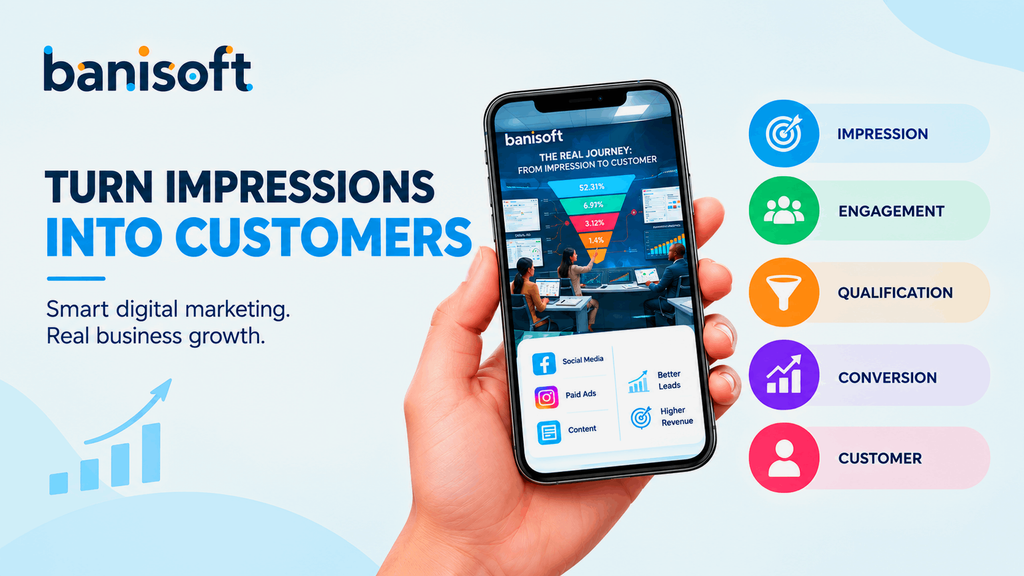
Neither approach is necessarily better.
The important thing is knowing why the platform is part of your marketing.
A B2B consultancy may find that a founder’s LinkedIn presence creates more opportunities than the company page.
An ecommerce business may depend heavily on visual content and paid social campaigns.
A local business may use social media mainly to stay visible within its community.
The strategy should follow how customers actually behave.
If your team is posting consistently but is unclear about what the activity is accomplishing, a social media marketing checklist can help you review the platforms, content and measurement more critically.
11. Don’t Stop Marketing the Moment Someone Becomes a Lead
Businesses often invest heavily in generating enquiries and then give very little attention to what happens afterwards.
Not every lead is ready to make a decision immediately.
People compare companies.
They get distracted.
They need approval.
They wait until the timing is better.
If you have no follow-up process, many of those opportunities simply disappear.
This is where email, CRM systems and automation can help.
Good lead nurturing does not mean sending endless sales emails.
It means giving people useful information at the right time and keeping the relationship alive until they are ready to take the next step.
For businesses with longer sales cycles, this can be just as important as generating the original lead.
A good email marketing checklist can help you review the basics, while businesses with more complicated sales journeys may need to look more closely at lead nurturing and marketing automation.
12. Fix Your Measurement Before Increasing Your Budget
One of the biggest risks in digital marketing is making decisions with incomplete or unreliable data.
Many businesses have Google Analytics installed.
That does not necessarily mean their tracking is useful.
The real questions are much more practical:
Can you see where good leads came from?
Can you identify which campaign generated a customer?
Do you know which landing pages are converting?
Can you tell which channels deserve more budget?
Tools such as Google Analytics 4, Search Console, advertising platforms, CRMs and call tracking can help answer those questions.
But the systems need to be connected properly.
It is also important to distinguish between a conversion and a valuable conversion.
A form submission may technically count as a lead. That does not mean it was a good lead.
The more you can connect marketing data with actual customer outcomes, the better your decisions become.
If there are doubts about the accuracy of your data, use a conversion tracking checklist before scaling your campaigns.
13. Authority Is Built Outside Your Website Too
Your website gives you complete control over how you describe your business.
The rest of the web provides another perspective.
A company that claims to be an expert in a subject but is never mentioned anywhere else may have a weaker authority footprint than one regularly referenced by respected publications, customers, partners and industry sources.
That is one reason backlinks still matter.
But authority is broader than backlinks alone.
Reviews, interviews, industry commentary, partnerships and original research can all contribute to how a brand is perceived.
The goal should not be to generate as many mentions as possible.
Relevance and credibility matter much more.
One strong mention from a respected publication in your industry may be more useful than dozens of links placed on websites nobody in your market would ever read.
If you want to strengthen this part of your marketing, our digital PR guide explains how to build credible third-party visibility without relying on low-quality link building.
14. Look at Marketing as One Connected System
A useful digital marketing review often reveals that the problem a business thinks it has is not the real problem.
A company might believe it needs more SEO traffic.
But after reviewing its website, you may find that organic traffic is already healthy and the bigger issue is that its service pages are not converting.
Another business might believe its Google Ads campaigns are too expensive because one campaign has a higher cost per lead.
When sales data is added, that same campaign may turn out to generate the highest-value customers.
This is why channel-level metrics need context.
At Banisoft, we think about this through our Profit-Centric Acceleration approach.
Instead of asking only whether traffic, clicks or rankings increased, the bigger question is whether marketing is moving the business toward qualified leads, customers and revenue.
Sometimes that means generating more traffic.
Sometimes it means improving the website.
Sometimes it means fixing tracking.
And sometimes the right decision is to stop spending money on something that is not contributing enough value.
Where Should You Start?
If this article has highlighted several problems, don’t try to fix everything at once. Start with the area closest to the business problem.
If you need more relevant traffic
Start with your SEO checklist, local search or Google Ads.
If you already have traffic but not enough enquiries
Look at your conversion rate optimisation checklist and the pages receiving the most traffic.
If you are generating leads but cannot tell what is working
Start with a conversion tracking checklist.
If your traditional search visibility is strong and you want to prepare for changing search behaviour
Explore your AI search optimisation checklist and then go deeper into Google AI Overviews or ChatGPT visibility if those channels are relevant to your audience.
If you generate plenty of leads but too few become customers
Look closely at follow-up, email and lead nurturing.
The right starting point depends on where opportunities are being lost.
Digital Marketing in 2026 Is About Connections
The individual parts of digital marketing still matter.
SEO matters.
Paid advertising matters.
Content matters.
Social media matters.
Email matters.
Analytics matters.
What is becoming more important is how those activities work together.
A customer may discover your business through Google, see your brand again on social media, read a third-party review, ask an AI tool for more information and finally convert through a branded search.
Giving all of the credit to the final click does not reflect how that journey actually happened.
The stronger approach is to build a system where each part of marketing has a role.
Search creates discovery.
Content helps people understand.
Authority builds trust.
Advertising captures demand.
Your website turns interest into action.
Follow-up keeps opportunities alive.
Analytics helps you decide what to improve.
That is the real purpose of this digital marketing checklist.
Not to make sure your business is doing everything.
But to understand whether the things you are doing are actually working together.
Frequently Asked Questions About Digital Marketing Checklists
What is included in a digital marketing checklist?
A digital marketing checklist usually covers the major areas that influence online growth, including strategy, SEO, paid advertising, website performance, content, social media, email, local search, analytics and conversion optimisation. The exact mix will depend on the business and how its customers make purchasing decisions.
Why should a business use a digital marketing checklist?
It gives you a structured way to identify gaps across different channels. This is especially useful when several people, agencies or platforms are involved and nobody has a clear view of how everything works together.
Is a digital marketing checklist the same as a digital marketing audit?
Not quite. A checklist tells you which areas are worth reviewing. A digital marketing audit goes deeper by examining performance, identifying problems and prioritising what should be fixed first.
How often should digital marketing be reviewed?
Individual campaigns may need weekly or monthly attention, while a broader strategic review can be useful every quarter or whenever something significant changes in the business, website, market or competitive landscape.
Do businesses need to use every digital marketing channel?
No. Using more channels does not automatically create better marketing. The right mix depends on where your customers spend time, how they research solutions and which channels can be used profitably.
Is SEO still important with AI search?
Yes. AI-powered discovery is changing how people find information, but websites still need strong technical foundations, useful content and enough authority for search systems to understand and trust them.
What should I fix first if my digital marketing is not working?
Start with the point closest to the problem. If you cannot measure performance properly, fix tracking. If traffic is strong but enquiries are weak, focus on conversion. If the website converts well but demand is low, then look at SEO, advertising or other acquisition channels.
Use This as Your Starting Point
Digital marketing will continue to change.
Search results will evolve.
Advertising platforms will become more automated.
AI will change how people research.
New channels will appear.
But the core business question will remain the same:
Are you reaching the right people and turning that attention into profitable customer relationships?
Use this page as the starting point for answering that question.
When one area needs more attention, move into the deeper resource built specifically for that subject.
Review the SEO checklist when organic visibility needs work.
Use the Google Ads checklist when paid search is underperforming.
Go through the local SEO checklist if customers need to find you in a specific geographic market.
Explore the AI search optimisation checklist if changing search behaviour is becoming important to your business.
And if the entire marketing system feels disconnected, start with a digital marketing audit checklist and work from there.
You do not need to tick every possible marketing box.
You need to know which part of the system deserves your attention next.