 Summarize in ChatGPT
Table of Contents
- Who This Blog Is For, How We Developed This Advice, and Why It Matters
- What Is Dental SEO?
- Why High-Intent Keywords Matter More Than Generic Traffic
- Why Is “Dentist Near Me” So Competitive?
- How Dental SEO Helps Clinics Get More Dental Patients
- How Can Dental Clinics Rank for Emergency Dentist Searches?
- How Does Google Business Profile Support Dental SEO?
- Why Do Reviews and Trust Signals Matter?
- How Can Dental Clinics Improve Visibility in AI Search?
- How Should SEO and Google Ads Work Together for Dental Clinics?
- Practical Framework: A 7-Step Dental SEO System
- Common Dental SEO Mistakes Clinics Should Avoid
- Dental SEO Checklist for Clinic Owners
- Conclusion
- FAQ Section
Most dental clinics do not lose patients because people have stopped searching for dental care. They lose patients because competitors show up first when people search on Google.
That is where dental SEO becomes important.
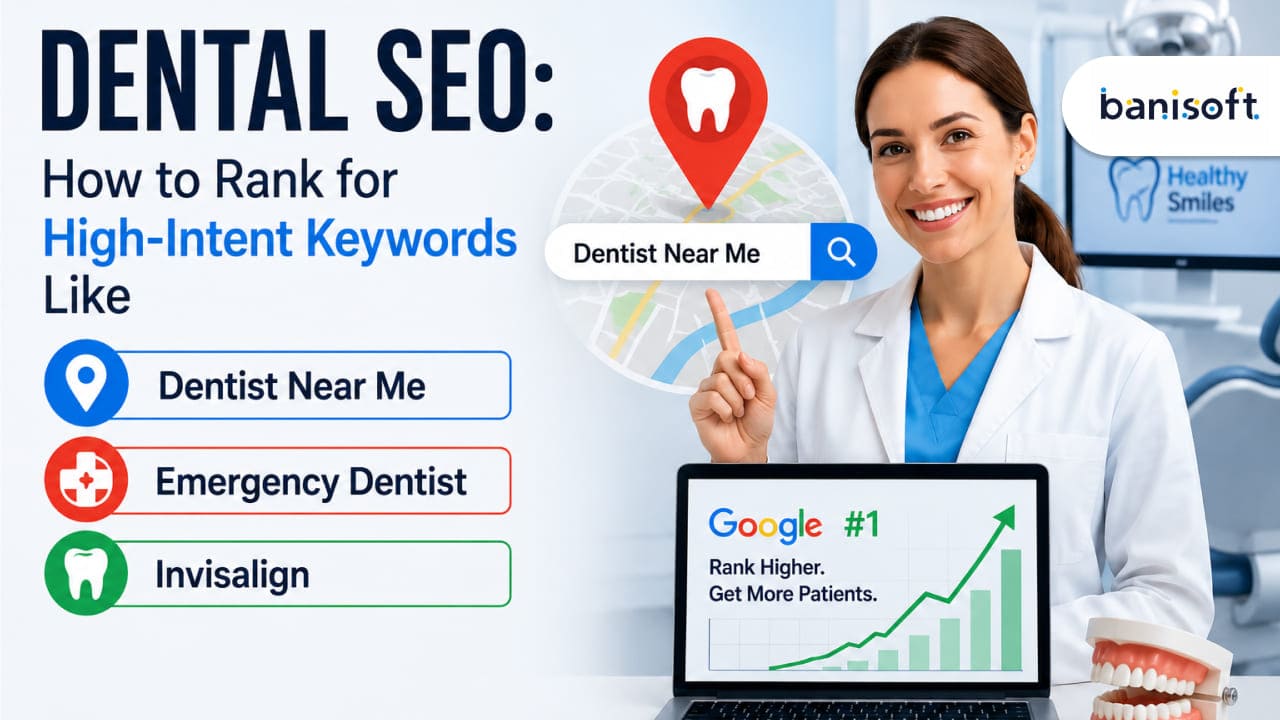
Dental SEO helps your clinic appear when patients search for high-intent keywords like “dentist near me,” “emergency dentist,” “Invisalign dentist,” “teeth whitening near me,” or “dental clinic open today.” These searches often come from people who already need care and may be ready to call, book, or compare clinics.
For dental clinics, SEO should not focus only on rankings. It should help your clinic increase visibility, build trust, generate calls, and turn local searches into real appointment requests.
Want to know why your dental clinic gets traffic but not enough appointment requests? We can review your SEO, Google Business Profile, and conversion journey to identify where potential patients drop off.
Who This Blog Is For, How We Developed This Advice, and Why It Matters
This blog is for dental clinic owners, dentists, practice managers, and decision-makers who want to attract more new patients through Google Search, Google Maps, and AI-driven search results.
We developed this advice from hands-on experience in dental marketing, including local SEO, Google Business Profile optimization, Google Ads, landing pages, review strategy, tracking, and lead generation.
This matters because patients no longer choose a dentist from one source. They compare clinics across Google Search, Google Maps, reviews, websites, ads, and AI-generated answers. If your clinic does not appear clearly and confidently across those touchpoints, another clinic may get the call.
What Is Dental SEO?
Dental SEO helps your dental clinic improve visibility on Google Search, Google Maps, and AI search platforms for the services and locations your patients search for.
Dental SEO usually includes:
- Website optimization
- Local SEO
- Google Business Profile optimization
- Service page creation
- Technical SEO
- Review strategy
- Content marketing
- Location page optimization
- Call and form tracking
- Conversion rate optimization
For example, your clinic may want to rank for searches such as:
- dentist near me
- emergency dentist near me
- Invisalign dentist near me
- family dentist near me
- dental implants near me
- teeth cleaning near me
- teeth whitening near me
- root canal dentist near me
But ranking for these keywords takes more than adding them to your homepage. Google needs to understand what your clinic offers, where you serve patients, why patients trust you, and whether your website answers the searcher’s intent.
Why High-Intent Keywords Matter More Than Generic Traffic
High-intent dental keywords attract patients who already need dental care and may be closer to booking an appointment.
Not every website visitor has the same value.
Someone searching “what is Invisalign” may only want general information. Someone searching “Invisalign dentist near me” is probably comparing providers.
Someone searching “why does my tooth hurt” may want basic advice. Someone searching “emergency dentist open now” likely needs urgent help.That is why dental SEO should focus on patient intent, not just traffic.
| Keyword Type | Example Search | Patient Intent | Best Page Type |
| Emergency intent | emergency dentist near me | Needs urgent care | Emergency dental page + GBP |
| Local intent | dentist near me | Wants a nearby clinic | Homepage, location page, GBP |
| Treatment intent | Invisalign dentist | Comparing providers | Invisalign service page |
| Cost intent | Invisalign cost | Checking affordability | Service page with cost guidance |
| Problem intent | Severe tooth pain dentist | Looking for a solution | Emergency or root canal page |
| Trust intent | clinic name reviews | Checking reputation | GBP and review pages |
A strong dental SEO strategy connects each keyword to the right page, message, CTA, and tracking method.
Why Is “Dentist Near Me” So Competitive?
“Dentist near me” is highly competitive because Google considers relevance, distance, and prominence when deciding which clinics appear in local search results.
Many dental clinics want to rank for “dentist near me,” but Google does not show every clinic equally.
To compete, your clinic needs:
- A well-optimized Google Business Profile
- Accurate name, address, phone number, and hours
- Correct dental categories
- Strong local reviews
- Service-specific website pages
- Local content signals
- Consistent citations
- High-quality photos
- Clear appointment CTAs
- A mobile-friendly website
- Strong trust signals
You should not treat “dentist near me” as one simple keyword. Patients search from different locations, devices, and situations. Google may show different results depending on where the patient stands, how complete your profile looks, how strong your reviews are, and how relevant your website appears.
💡Expert Tip
Do not rely only on your homepage to rank for every dental search. Build dedicated pages for your highest-value services, then connect them to your Google Business Profile, reviews, internal links, and local SEO strategy.
How Dental SEO Helps Clinics Get More Dental Patients
Dental SEO helps clinics attract more patients by improving visibility, trust, and conversion when people search for dental care.
Good dental SEO connects four important areas:
- Visibility — Can patients find your clinic?
- Relevance — Does your clinic appear for the right services?
- Trust — Do reviews, credentials, and content support the decision?
- Conversion — Can the patient easily call, book, or request an appointment?
Many clinics only focus on rankings. That creates a problem.
Your clinic may rank but still miss leads if:
- Patients cannot find your phone number quickly
- The booking button is hard to see
- The service page does not explain treatment clearly
- Reviews look weak or outdated
- The website loads slowly
- The mobile experience feels poor
- The page sounds generic
- The clinic does not explain why patients should choose it
Dental SEO should support patient acquisition, not just keyword rankings.
How Can Dental Clinics Rank for Emergency Dentist Searches?
To rank for emergency dentist searches, your clinic needs a dedicated emergency dental page, strong local SEO, a complete Google Business Profile, urgent-care messaging, visible hours, and fast booking options.
Emergency dental searches usually show very high intent.
Patients may search:
- emergency dentist near me
- emergency dentist open now
- same day dentist appointment
- urgent dental care near me
- broken tooth dentist
- tooth pain dentist near me
- dental abscess emergency dentist
Your emergency dental page should answer urgent questions quickly.
Patients want to know:
- Do you offer emergency appointments?
- Can I call now?
- What dental emergencies do you treat?
- What should I do if I have swelling or severe pain?
- Where is your clinic located?
- What are your hours?
- How quickly can I book?
Example Section for an Emergency Dentist Page
Need an Emergency Dentist in [City]?
If you have severe tooth pain, swelling, bleeding, a broken tooth, or signs of infection, call our dental clinic as soon as possible. Our team can assess your situation, explain your next step, and help you find the earliest available appointment.
Verify before publishing:
Confirm same-day availability, emergency hours, pricing, insurance information, and treatment claims with the clinic before publishing.
💡Expert Tip
Emergency dental pages should make calling easy to call. Add a click-to-call button near the top, show clinic hours clearly, and keep the message simple. Patients in pain do not want to read a long page before they find your phone number.
How Can Dental Clinics Rank for Invisalign Searches?
To rank for Invisalign searches, your clinic needs a detailed Invisalign page that explains suitability, treatment process, cost factors, FAQs, consultation options, and provider expertise.
Invisalign patients usually compare options before they book.
They may search:
- Invisalign dentist near me
- Invisalign cost
- Invisalign vs braces
- clear aligners dentist
- best Invisalign dentist near me
- cosmetic dentist near me
- smile makeover dentist
These patients want confidence before they take action.
They ask:
- Is Invisalign right for me?
- How much does Invisalign cost?
- How long does treatment take?
- Will clear aligners work for my case?
- What happens during the consultation?
- Does the clinic offer payment options?
- Can I see examples of results?
Your Invisalign page should include:
- Who Invisalign may suit
- What issues it can help correct
- How the consultation works
- How long treatment may take
- What affects cost
- How patients care for aligners
- What happens after treatment
- Common FAQs
- Dentist or provider information
- Real before-and-after examples, if approved and compliant
- A clear consultation CTA
💡Expert Tip
Do not publish a thin Invisalign page with only a few short paragraphs. Patients need education before they commit, and Google needs enough detail to understand your page.
How Does Google Business Profile Support Dental SEO?
Google Business Profile helps dental clinics appear in Google Maps and local search results for nearby patients looking for dental care.
For many dental clinics, Google Business Profile becomes the first touchpoint before the website.
Patients may see:
- Clinic name
- Reviews
- Rating
- Photos
- Hours
- Services
- Address
- Directions
- Phone number
- Website link
- Appointment link
- Q&A
- Updates
To improve your Google Business Profile, review these areas:
- Primary category
- Secondary categories
- Services
- Business description
- Appointment URL
- Photos
- Hours
- Reviews
- Q&A
- Posts and updates
Use accurate information. Do not stuff keywords into your business name. Do not create fake locations. Do not use fake reviews. Dental marketing should build trust, not manipulate patients.
Why Do Dental Service Pages Matter for SEO?
Dental service pages help Google, patients, and AI tools understand which treatments your clinic provides and which patient needs you can solve.
Many dental websites make one major mistake: they list every service on one general page.
That approach limits SEO.
If your clinic offers emergency dentistry, Invisalign, dental implants, teeth whitening, root canal treatment, and family dentistry, each of these important services should have its own page.
A strong service page should include:
- Clear H1 with service and location
- Direct answer introduction
- Patient symptoms or needs
- Treatment explanation
- Who the service suits
- Appointment process
- Cost factors, where appropriate
- Benefits and limitations
- FAQs
- Dentist or team trust signals
- Related service links
- Clear CTA
For example, instead of relying only on one “Services” page, your clinic can create:
- /emergency-dentist-city/
- /invisalign-city/
- /dental-implants-city/
- /teeth-whitening-city/
- /root-canal-city/
- /family-dentist-city/
These pages can support SEO, Google Ads, AI visibility, and patient conversion.
How Can Dental Clinics Improve Visibility in AI Search?
Dental clinics can improve AI search visibility by publishing clear, structured, accurate, and locally relevant content that answers real patient questions.
AI tools like Google AI Overviews, ChatGPT, Perplexity, and Gemini often summarize content that answers questions clearly.
Your dental content should include:
- Clear headings
- Direct answers
- Short definitions
- Step-by-step explanations
- FAQs
- Local context
- Service-specific details
- Expert review
- Schema markup
- Internal links
Add sections that answer common patient questions, such as:
- What should I do if I have severe tooth pain?
- How much does Invisalign cost?
- When should I see an emergency dentist?
- Is teeth whitening safe?
- How do I choose a dentist near me?
- What happens during a dental implant consultation?
💡Expert Tip
AI search optimization should not feel separate from SEO. If your content genuinely helps patients understand symptoms, treatments, costs, options, risks, and next steps, it already supports AI visibility.
Why Do Reviews and Trust Signals Matter?
Reviews help patients decide whether they can trust your clinic. They also support local reputation and patient confidence.
Dental care feels personal. Patients want to know whether your clinic feels safe, professional, gentle, clean, and reliable.
They check reviews to understand:
- Does the dentist explain treatment clearly?
- Does the clinic run on time?
- Does the staff treat patients well?
- Do patients mention pain-free or gentle care?
- Do reviews mention specific services?
- Does the clinic respond professionally?
- Are the reviews recent?
Use service-specific reviews wherever possible.
For example:
- Invisalign page: reviews mentioning Invisalign, aligners, smile improvement
- Emergency dentist page: reviews mentioning urgent care, tooth pain, quick appointment
- Teeth whitening page: reviews mentioning whitening or cosmetic care
- Kids dentistry page: reviews mentioning children, comfort, and patience
Never create fake reviews, fake patient stories, or fake testimonials. Use real, approved patient feedback and follow all advertising and privacy guidelines.
How Should SEO and Google Ads Work Together for Dental Clinics?
SEO builds long-term visibility, while Google Ads can help clinics capture demand for high-value services faster.
Dental SEO takes time. Google Ads can help your clinic appear quickly for important searches while your SEO grows.
For example:
- Use Google Ads for emergency dentist, Invisalign, dental implants, and new patient offers.
- Use SEO to build long-term rankings for service and location pages.
- Use Google Business Profile to generate calls, website visits, and direction requests.
- Use landing pages to improve conversion.
Use tracking to understand which services generate real inquiries.
| Channel | Best For | Strength | Limitation |
| Dental SEO | Long-term patient acquisition | Builds organic visibility and trust | Takes time |
| Google Business Profile | Local calls and map visibility | Captures nearby patients | Depends on competition and proximity |
| Google Ads | Faster lead generation | Gives immediate visibility | Requires budget and management |
| Landing Pages | Better conversions | Turns clicks into inquiries | Needs testing |
| Reviews | Patient trust | Supports decision-making | Must grow ethically |
If your clinic depends on Google for new patients, a proper SEO, Google Business
Profile, and Google Ads audit can show where you lose leads — rankings, reviews, landing pages, calls, or tracking.
Practical Framework: A 7-Step Dental SEO System
Step 1: Choose High-Intent Dental Services
Start with services that can directly create appointment opportunities.
Examples include:
- Emergency dentistry
- Invisalign
- Dental implants
- Teeth whitening
- Root canal treatment
- Crowns and bridges
- Dental cleaning
- Family dentistry
- Kids dentistry
- Wisdom tooth extraction
Do not choose keywords only because they show search volume. Choose keywords that connect to real patient demand and clinic revenue.
Step 2: Map Keywords to the Right Pages
Every keyword needs the right destination.
For example:
- “dentist near me” → homepage, location page, Google Business Profile
- “emergency dentist near me” → emergency dentist page
- “Invisalign dentist near me” → Invisalign page
- “dental implants cost” → dental implants page
- “tooth pain dentist” → emergency or root canal page
This approach stops one page from trying to rank for every service.
Step 3: Optimize Google Business Profile
Your Google Business Profile should match your website and clearly show what your clinic offers.
Review:
- Clinic name
- Address
- Phone number
- Website URL
- Appointment link
- Categories
- Services
- Hours
- Photos
- Reviews
- Business description
- Q&A
Keep everything accurate and consistent.
Step 4: Build Strong Local Service Pages
Each priority service page should answer the patient’s real questions.
For example, an emergency dentist page should explain:
- What counts as a dental emergency
- When patients should call
- What symptoms need urgent care
- What treatment options may help
- How patients can book
- Where the clinic is located
This helps patients and search engines understand the value of the page.
Step 5: Add Trust Signals
Dental websites need strong trust signals.
Add:
- Dentist bios
- Qualifications
- Clinic photos
- Treatment explanations
- Real patient reviews
- Service-specific testimonials
- Before-and-after examples, if compliant
- Insurance or payment information
- Safety and sterilization details
- Clear contact details
- Expert-reviewed content notes
Trust signals can improve both conversion and content quality.
Step 6: Track Calls, Forms, and Bookings
Dental SEO should connect to business outcomes.
Track:
- Phone calls
- Contact forms
- Online bookings
- Direction clicks
- Appointment button clicks
- Service-specific inquiries
- Google Business Profile calls
- Google Ads conversions
- Missed calls
If your clinic does not track leads properly, you cannot see which marketing activities actually drive patient visits.
Step 7: Review and Improve Monthly
Dental SEO is not a one-time project.
Each month, review:
- Which keywords improved?
- Which pages generated leads?
- Which services need better content?
- Which Google Business Profile actions increased?
- Which pages get traffic but few inquiries?
- Which reviews mention priority services?
- Which competitors outrank you?
- Which FAQs can you improve?
Then update your content, service pages, reviews, and conversion journey.
Common Dental SEO Mistakes Clinics Should Avoid
Mistake 1: Targeting Only “Dentist Near Me”
“Dentist near me” matters, but it should not become your entire strategy. Your clinic also needs service-specific visibility for searches like emergency dentist, Invisalign, dental implants, root canal, teeth whitening, and family dentist.
Mistake 2: Publishing Thin Service Pages
A short paragraph and a contact form will not usually compete for valuable dental keywords. Patients need useful information, and Google needs enough context to understand the page.
Mistake 3: Ignoring Google Business Profile
Google Business Profile plays a major role in local dental visibility. Weak categories, outdated hours, poor photos, and a lack of a review strategy can reduce calls and direction requests.
Mistake 4: Writing Blogs Without a Patient Acquisition Strategy
Blogs can help SEO, but random topics may not generate patients. Connect blog topics to service pages.
For example:
- Blog: What to Do If You Have Severe Tooth Pain
- Internal link: Emergency dentist page
- CTA: Call for urgent dental care
Mistake 5: Not Tracking Calls and Bookings
Rankings and traffic do not tell the full story. Track calls, forms, bookings, and missed opportunities so you can connect SEO to real patient growth.
Mistake 6: Using Weak CTAs
“Contact us” often feels too generic.
Use stronger CTAs such as:
- Book an emergency dental appointment
- Request an Invisalign consultation
- Call our dental clinic
- Book a new patient exam
- Ask about dental implant options
Mistake 7: Ignoring Mobile Experience
Many dental patients search on mobile. Your mobile website should make it easy to call, book, read reviews, check services, and get directions.
Dental SEO Checklist for Clinic Owners
Google Business Profile Checklist
- Check clinic name, address, phone number, and hours.
- Choose accurate dental categories.
- Add all important services.
- Add a working appointment link.
- Upload recent clinic and team photos.
- Request reviews ethically.
- Respond to reviews professionally.
- Update holiday hours.
- Add useful Q&A content.
- Keep your website URL accurate.
Website SEO Checklist
- Create separate pages for major services.
- Make your homepage clear and location-focused.
- Optimize title tags and meta descriptions.
- Use clear H1 and H2 headings.
- Write for patients, not only for Google.
- Add internal links between related pages.
- Improve mobile experience.
- Make phone numbers and forms easy to use.
- Optimize images with descriptive alt text.
- Check technical SEO issues.
Conversion Checklist
- Show the phone number clearly on mobile.
- Add a sticky call or booking button.
- Use service-specific CTAs.
- Keep forms short.
- Show reviews and trust signals before important CTAs.
- Track calls and forms.
- Separate SEO and Google Ads leads in reporting.
- Review missed calls.
AI Search Optimization Checklist
- Answer common patient questions clearly.
- Add visible FAQs.
- Keep answers concise and accurate.
- Use natural-language headings.
- Add expert review where possible.
- Use schema markup correctly.
- Mention services, locations, and clinic details clearly.
- Verify claims before publishing.
Conclusion
Dental SEO helps clinics do more than rank for keywords. It helps patients find, trust, and contact your clinic when they need care.
High-intent searches like “dentist near me,” “emergency dentist,” and “Invisalign dentist” can create real appointment opportunities. But your clinic needs more than keywords. You need strong local SEO, an optimized Google Business Profile, detailed service pages, real reviews, helpful content, clear CTAs, and proper tracking.
The clinics that grow consistently usually do not rely on random SEO tasks. They build a complete patient acquisition system.
Need help improving your dental SEO, Google Business Profile, Google Ads, landing pages, and lead tracking? Our team can review your current marketing and show where your clinic can improve visibility, calls, bookings, and new patient inquiries.
Frequently asked questions
1. What is dental SEO?
Dental SEO helps a dental clinic improve visibility on Google Search, Google Maps, and AI search platforms. It includes website optimization, Google Business Profile optimization, service pages, reviews, technical SEO, content, and tracking. The goal is to help more patients find and contact your clinic.
2. How long does dental SEO take to work?
Dental SEO usually takes several months because rankings depend on competition, location, website quality, reviews, content, and the strength of the Google Business Profile. Some improvements may happen quickly, but strong results need consistent work. Avoid any agency that promises guaranteed rankings in a fixed number of days.
3. Should dental clinics invest in SEO or Google Ads?
Most dental clinics benefit from both. SEO builds long-term visibility and trust, while Google Ads can generate faster visibility for high-intent services like emergency dentistry, Invisalign, and dental implants. The right mix depends on your goals, budget, competition, and timeline.
4. Why is my clinic not ranking for “dentist near me”?
Your clinic may not rank because competitors have stronger Google Business Profiles, better reviews, more relevant service pages, stronger local signals, or better website authority. Proximity also matters. Google may show different results depending on the patient’s location and search behavior.
5. Do dental service pages help SEO?
Yes. Dedicated service pages help Google understand exactly what your clinic offers. Pages for emergency dentistry, Invisalign, dental implants, teeth whitening, root canal treatment, and family dentistry can improve relevance for service-specific searches and help patients take action.
6. How important are reviews for dental SEO?
Reviews strongly influence patient trust and local decision-making. Patients often compare clinics based on review quality, recency, and service mentions. Your clinic should ethically request reviews, respond professionally, and, where possible, use real, service-specific reviews on relevant pages.
7. Can blogs help dental clinics get more patients?
Blogs can help when they answer real patient questions and connect to service pages. For example, a blog about tooth pain can link to an emergency dentist page. Blogs work best when they support patient intent, internal linking, and conversion, rather than chasing random traffic.
8. What should a dental SEO audit include?
A dental SEO audit should review your website, service pages, local rankings, Google Business Profile, reviews, competitors, technical SEO, content gaps, CTAs, tracking, calls, forms, and booking journey. The goal is to find where your clinic loses visibility and patient inquiries.