 Summarize in ChatGPT
Content marketing has changed. A few years ago, most businesses focused on writing blogs, adding keywords, sharing content on social media, and waiting for traffic to grow.
Today, the search landscape is different.
People still use Google, but they also ask questions on ChatGPT, Perplexity, Gemini, Google AI Overviews, and AI Mode. Instead of only looking through a list of blue links, users now expect direct answers, comparisons, summaries, recommendations, and trusted sources.
This does not mean SEO is dead.
It means SEO has evolved.
Businesses now need content that can do three things at the same time:
- Rank in traditional Google search results.
- Be clear and trustworthy enough to appear in AI-generated answers.
- Convert readers into leads, enquiries, calls, booked appointments, demo requests, or customers.
That is where AI-powered content marketing becomes useful.
When used properly, AI can help you research faster, organize ideas, understand search intent, create better outlines, improve content quality, repurpose content, and identify gaps. But AI should not replace human expertise, business strategy, brand voice, accuracy, or real experience.
This beginner’s guide explains how to use AI content marketing and SEO together to grow visibility, traffic, trust, and leads.
What Is AI-Powered Content Marketing?
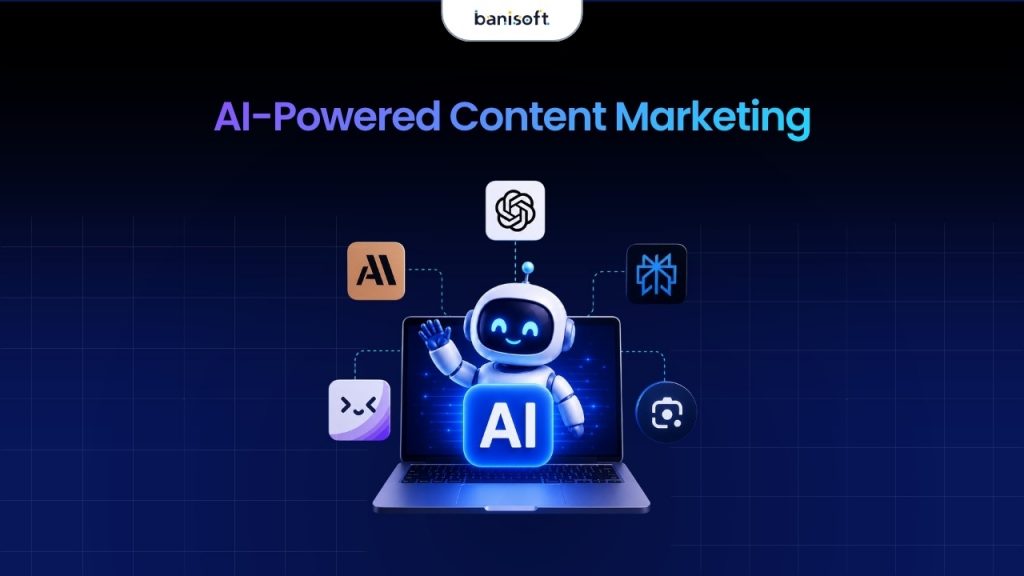
AI-powered content marketing is the process of using artificial intelligence tools to improve how you plan, create, optimize, distribute, and measure content.
In simple terms, AI helps you work smarter. It can support keyword research, topic ideas, content briefs, outlines, FAQs, competitor analysis, content repurposing, and performance review.
But AI-powered content marketing does not mean publishing unedited AI-written articles.
A strong AI content marketing strategy combines:
- Human expertise
- Search intent research
- SEO fundamentals
- AI-assisted research
- Clear content structure
- Real business examples
- Original insights
- Strong calls to action
- Performance tracking
For example, a dental clinic can use AI to identify patient questions around Invisalign, emergency dental care, or teeth whitening. But the final content still needs local context, treatment accuracy, dentist input, trust signals, patient-focused language, and clear booking options.
Similarly, a SaaS company can use AI to create topic clusters around product use cases, comparisons, integrations, and pain points. But the content still needs product expertise, customer examples, screenshots, feature details, and conversion-focused messaging.
AI can make content marketing faster. Strategy makes it effective.
Why SEO Still Matters in the Age of AI Search
SEO still matters because AI search engines need credible, crawlable, well-structured information to generate useful answers.
AI tools and search engines do not create authority from nothing. They look for signals that help them understand which content is useful, relevant, trustworthy, and easy to interpret.
That means your website still needs:
- Indexable pages
- Clear headings
- Helpful answers
- Strong topical relevance
- Internal linking
- Technical SEO
- Fresh and accurate content
- Trust signals
- Structured data where appropriate
- A good user experience
The difference is that your content now has to serve more than one search environment.
Traditional SEO helps you appear in Google’s organic results. AI search optimization helps your content become easier for AI systems to understand, summarize, and reference.
For a business, this matters because search behaviour is becoming more conversational. People are not only typing “SEO agency near me.” They are asking longer questions like:
- “What is the best way for a small business to use AI for SEO?”
- “How can a dental clinic get more patients from Google?”
- “Should I invest in SEO or Google Ads first?”
- “How do I create content that appears in AI search results?”
Your content should answer these real questions clearly.
The New Beginner SEO Mindset: From Keywords to Intent
Beginner SEO used to start with one question: “Which keyword should I rank for?”
That question is still important, but it is no longer enough.
Modern SEO starts with search intent.
Search intent means understanding what the user really wants when they search. Are they trying to learn, compare, buy, book, solve a problem, or choose a provider?
For example, these keywords may look similar, but the intent is different:
| Search Query | Likely Intent |
| What is AI content marketing? | Learning |
| AI content marketing strategy | Planning |
| Best AI tools for content marketing | Comparing |
| AI SEO agency | Hiring |
| Content marketing services for SaaS | Commercial investigation |
| How to optimize content for AI search | Problem-solving |
A beginner SEO strategy should consider:
- What the audience is searching for
- Why they are searching
- What stage of the buyer journey they are in
- What problem they want solved
- What type of answer they expect
- What action they may take next
This is where AI can help. AI tools can quickly group topics by intent, identify common questions, create content maps, and suggest related subtopics.
But you should always validate AI suggestions with real data from tools like Google Search Console, Google Keyword Planner, Semrush, Ahrefs, SERP analysis, customer calls, sales conversations, and your own business experience.
You would have heard “Content is the king of SEO” – a phrase that has created a buzz among internet marketers.
While there have been great debates over the efficacy of content marketing for SEO, the crux is that these two disciplines should very well work together to deliver successful results.
Just think about it, in the absence of content, there would be nothing to optimize for the search engines Also write about the user. Every blog post, tweet, product description and meta tag is an example of content.
The content we are talking about here does not imply writing lengthy articles or creating catchy infographics.
Good content is anything that communicates a message to the audience and, in turn, instigates profitable customer action.
Step 1 — Understand Your Audience Before Using AI
Before using AI to create content, you need to know who the content is for.
Many businesses make the mistake of opening an AI tool and asking it to “write a blog on SEO.” The result is usually generic content that could belong to any website.
A better approach starts with audience clarity.
Ask yourself:
- Who is the reader?
- What industry are they in?
- What problem are they trying to solve?
- What do they already know?
- What are they confused about?
- What objections do they have?
- What action do we want them to take?
- What makes our solution different?
- What proof or trust signals do they need?
For example, a healthcare clinic owner may care about patient bookings, Google Maps visibility, reviews, calls, and local trust. A SaaS founder may care about demos, product-led growth, comparison pages, and lead quality. An eCommerce brand may care about product discovery, category rankings, conversion rates, and repeat purchases.
The more clearly you define the audience, the better your AI prompts, content strategy, and SEO results will be.
Simple Audience Prompt for Beginners
Use this prompt before writing any blog:
“Act as a senior SEO and content strategist. Create a buyer persona for [business type] targeting [audience] who wants to solve [main problem]. Include their pain points, search intent, common objections, buying stage, content topics, and conversion triggers.”
This gives you a stronger foundation before writing.
Step 2 — Use AI for Smarter Keyword and Topic Research
AI can make keyword research faster, but it should not replace proper SEO validation.
Use AI to generate ideas. Use SEO tools and real search data to confirm them.
AI can help you identify:
- Topic clusters
- Search intent groups
- Beginner questions
- FAQ ideas
- Comparison topics
- Content gaps
- Long-tail keywords
- Industry-specific angles
- Buyer journey topics
- Internal linking opportunities
For this blog, the main keyword is “AI content marketing.” But the supporting terms also matter:
- AI-powered content marketing
- SEO content marketing
- AI SEO strategy
- AI search optimization
- Beginner SEO strategies
- Content marketing for business growth
- How to use AI for content creation
- Google AI Overviews optimization
- Answer engine optimization
- Generative engine optimization
- Content marketing for lead generation
The goal is not to repeat these keywords again and again. The goal is to cover the topic deeply and naturally.
Example: Keyword Research for a Service Business
Suppose you run a law firm. Instead of writing one generic blog called “Legal Marketing Tips,” you could use AI and SEO research to build a content cluster around:
- SEO for law firms
- Google Ads for lawyers
- Local SEO for attorneys
- How to get more legal leads
- Best website pages for law firm lead generation
- How reviews affect law firm rankings
- Law firm content marketing mistakes
- SEO vs PPC for law firms
This gives Google and AI search engines a clearer understanding of your expertise.
It also gives your audience more useful content at different stages of their buying journey.
Step 3 — Build Topic Clusters Instead of Random Blogs
One of the biggest mistakes beginners make is publishing random blog posts with no larger strategy.
A better approach is to build topic clusters.
A topic cluster is a group of related pages that cover a subject in depth. Usually, there is one main pillar page supported by several related blogs.
For example, if your main topic is “AI content marketing,” your cluster could include:
| Pillar Topic | Supporting Blog Ideas |
| AI Content Marketing | How to use AI for keyword research |
| AI Content Marketing | AI content writing mistakes to avoid |
| AI Content Marketing | How to optimize content for AI search |
| AI Content Marketing | AI content marketing tools for beginners |
| AI Content Marketing | SEO content strategy for small businesses |
| AI Content Marketing | How to measure content marketing ROI |
Each supporting blog should link back to the main pillar page. The pillar page should also link to the supporting blogs.
This helps with:
- Topical authority
- User navigation
- Crawlability
- Better internal linking
- Stronger content depth
- Higher chances of ranking for related queries
For service businesses, topic clusters are especially powerful.
A dental clinic can build a cluster around Invisalign, dental implants, emergency dentistry, or teeth whitening. A real estate business can build clusters around local buying guides, selling tips, investment areas, mortgage questions, and neighbourhood pages. A SaaS company can build clusters around use cases, integrations, comparisons, and customer problems.
Random content creates noise. Topic clusters create authority.

Step 4 — Create Helpful Content That AI and Humans Can Trust
AI has made it easy to produce content. That also means the internet is full of generic articles.
To stand out, your content needs trust.
Search engines and AI systems are more likely to value content that is helpful, original, clear, and supported by experience.
This is where E-E-A-T matters.
E-E-A-T stands for:
- Experience
- Expertise
- Authoritativeness
- Trustworthiness
For beginners, this means your content should not just explain the topic. It should show that you understand the real problem.
You can improve E-E-A-T by adding:
- First-hand examples
- Industry-specific insights
- Real client scenarios
- Expert quotes
- Case study references
- Clear author information
- Updated facts
- Transparent limitations
- Practical frameworks
- Original screenshots or visuals
- Step-by-step explanations
- Internal and external references
For example, instead of saying:
“Content marketing helps businesses grow.”
Say:
“For a local clinic, content marketing can support patient growth by answering high-intent questions such as treatment cost, symptoms, procedure timelines, insurance coverage, parking, location, and booking options. This makes the content more useful for patients and more valuable for search engines.”
The second version is more specific, more helpful, and more trustworthy.

Step 5 — Optimize the Blog for SEO and AI Search Visibility
Good content still needs proper optimization.
A beginner-friendly SEO and AI search optimization checklist should include:
Title Tag
Your title should include the main topic and a clear benefit.
Example:
AI-Powered Content Marketing: Beginner SEO Strategies for Growth
Meta Description
Your meta description should explain what the reader will learn and why it matters.
Example:
Learn how AI-powered content marketing helps beginners improve SEO, build trust, grow traffic and generate better business leads.
H1 and Heading Structure
Use one clear H1. Use H2s and H3s to organize the article logically.
Good headings help readers scan the content. They also help search engines and AI systems understand the structure.
Short Answer Paragraphs
Add direct answer-style paragraphs under important headings.
For example:
“AI-powered content marketing means using artificial intelligence to improve content research, planning, writing, optimization, repurposing, and performance tracking while keeping human strategy and expertise at the centre.”
These concise answers are easier for AI systems to extract and summarize.
Internal Links
Link to related service pages and blogs on your website. Internal links help users move through your site and help search engines understand your content relationships.
For example, this blog could internally link to:
- SEO services
- Content marketing services
- Google Ads management
- Digital marketing services
- Related content marketing blogs
- SEO tools blog
- Contact or proposal page
External Links
Use trusted outbound links when you reference important concepts, official guidance, or research.
This can improve credibility and help readers verify key points.
FAQs
Add FAQs that answer real user questions. These are useful for readers and can also support AI search visibility.
Schema Markup
FAQPage schema can help search engines better understand your FAQ content. It does not guarantee rich results, but it creates a cleaner structured-data layer.
Images and Alt Text
Use relevant images, diagrams, checklists, or workflow visuals. Add descriptive alt text.
Example:
“AI content marketing workflow for SEO keyword research, content creation and lead generation.”
Technical SEO
Make sure the page loads fast, works well on mobile, uses clean URLs, has no indexing issues, and is easy to crawl.
AI search visibility starts with basic technical SEO.
Step 6 — Use AI to Improve, Not Replace, Human Writing
AI is useful, but it should not be treated as a replacement for strategy.
- A weak AI workflow looks like this:
- Ask AI to write a blog.
- Copy the output.
- Publish it.
- Hope it ranks.
- A strong AI workflow looks like this:
- Define the audience.
- Research search intent.
- Build a keyword and topic cluster.
- Use AI to create a content brief.
- Add expert insights and examples.
- Write or edit with brand voice.
- Check accuracy.
- Optimize headings, links, FAQs, and schema.
- Add a conversion-focused CTA.
- Track performance and update the content.
AI can help with:
- Brainstorming
- Keyword grouping
- Content outlines
- Drafting sections
- Editing clarity
- Repurposing content
- Creating FAQs
- Summarizing long content
- Finding missing subtopics
- Generating title and meta ideas
Humans should handle:
- Strategy
- Accuracy
- Positioning
- Experience
- Client examples
- Brand voice
- Final editing
- Compliance
- Conversion messaging
- Business relevance
The best content does not sound like AI. It sounds like it was written by someone who understands the reader’s problem.
Step 7 — Promote and Repurpose Your Content
Publishing a blog is not the end of content marketing.
It is the beginning of distribution.
A well-written blog can become many smaller content assets.
For example, this blog can be repurposed into:
- LinkedIn posts
- Email newsletter tips
- Short video scripts
- Instagram carousel posts
- YouTube talking points
- Sales enablement material
- Lead magnet checklists
- Infographics
- Webinar topics
- FAQ snippets
- Social media captions
A service business can turn one SEO blog into a full content campaign.
For example, a blog on “Google Ads for Dentists” can become:
- A LinkedIn post on when dentists should run ads
- A short video on SEO vs PPC
- A checklist for dental clinic owners
- An FAQ section for a service page
- A landing page section
- An email to past leads
- A sales call talking point
AI can help repurpose the content faster, but the message should still match the platform and audience.
Step 8 — Measure Growth Beyond Traffic
Traffic is important, but traffic alone does not grow a business.
A beginner SEO strategy should track both visibility and business outcomes.
Important metrics include:
| Metric | What It Tells You |
| Impressions | How often your content appears in search |
| Clicks | How many users visit your page |
| CTR | Whether your title and meta description attract clicks |
| Rankings | Where your content appears for target queries |
| Engagement | Whether readers stay and interact |
| Scroll depth | How much of the content people consume |
| Leads | How many users submit forms, call, or enquire |
| Bookings | How many appointments or demos are generated |
| Assisted conversions | Whether content helps users convert later |
| AI visibility | Whether your brand appears in AI-generated answers |
| Brand mentions | Whether your business is being discussed or cited |
| Revenue impact | Whether content contributes to actual business growth |
For Banisoft, this is where content marketing becomes more strategic.
The goal is not just to publish more blogs. The goal is to understand which content helps generate qualified traffic, better enquiries, higher trust, and measurable leads.
Common AI Content Marketing Mistakes Beginners Should Avoid
AI can help beginners move faster, but it can also create problems when used carelessly.
Here are the most common mistakes to avoid.
1. Publishing Unedited AI Content
AI-generated drafts often sound generic. Always edit for accuracy, tone, examples, and business relevance.
2. Chasing Only High-Volume Keywords
High-volume keywords are not always the best keywords. Focus on intent, competition, and business value.
3. Ignoring Search Intent
A blog will not perform well if it does not match what the user actually wants.
4. Creating Thin Content
Short, surface-level content rarely builds authority. Add examples, steps, FAQs, comparisons, and helpful explanations.
5. Not Adding Experience
AI can explain a topic, but it cannot replace your real experience. Add insights from client work, sales calls, industry knowledge, and customer questions.
6. Forgetting Internal Links
Internal links help users and search engines understand your website structure.
7. Missing Calls to Action
Every business blog should guide the reader toward the next step, whether that is reading another resource, booking a call, downloading a guide, or requesting a proposal.
8. Not Updating Old Content
SEO content should be reviewed regularly. Outdated examples, old screenshots, broken links, and weak sections can reduce trust.
9. Measuring Only Rankings
Rankings matter, but leads, calls, form submissions, bookings, and revenue matter more.
10. Treating AI as a Shortcut Instead of a System
AI works best when it supports a clear strategy. Without strategy, AI only helps you create more average content faster.
Beginner’s AI Content Marketing Checklist
Use this checklist before publishing your next blog.
Strategy Checklist
- Define the target audience.
- Identify the main business goal.
- Choose one primary keyword.
- Group supporting keywords by intent.
- Review competing pages.
- Identify content gaps.
- Decide the desired user action.
Content Planning Checklist
- Create a clear outline.
- Add H2 and H3 headings.
- Include short answer-style sections.
- Add real examples.
- Include expert input where possible.
- Add FAQs.
- Plan internal links.
- Plan trusted outbound links.
SEO Optimization Checklist
- Optimize the title tag.
- Write a clear meta description.
- Use the primary keyword naturally.
- Add related terms without stuffing.
- Optimize image alt text.
- Add internal links.
- Add schema where relevant.
- Check mobile usability.
- Check page speed.
- Make sure the page is indexable.
Conversion Checklist
- Add a clear CTA.
- Mention the business benefit.
- Make the next step easy.
- Add trust signals.
- Link to relevant service pages.
- Track forms, calls, and bookings.
Measurement Checklist
- Track impressions.
- Track clicks.
- Track rankings.
- Track engagement.
- Track leads.
- Track assisted conversions.
- Monitor brand mentions.
- Review AI search visibility.
- Update the content regularly.
Final Thoughts
AI-powered content marketing is not about replacing human creativity or SEO expertise. It is about making the content process smarter, faster, and more strategic.
For beginners, the opportunity is clear.
Use AI to research better topics, understand your audience, organize ideas, improve structure, optimize content, and repurpose valuable insights. But keep human expertise at the centre.
The businesses that win in search will not be the ones publishing the most AI-generated content. They will be the ones creating helpful, trustworthy, well-structured content that answers real questions and supports real business goals.
SEO still matters. Content quality still matters. Trust still matters. Conversion still matters.
AI simply raises the standard.
At Banisoft, we help businesses build SEO and content marketing strategies designed for modern search, AI visibility, and measurable growth. If you want your content to attract better traffic, generate qualified leads, and support long-term digital growth, our team can help you build a smarter content strategy.
FAQs About AI Content Marketing and SEO
1. What is AI-powered content marketing?
AI-powered content marketing means using artificial intelligence to support content research, planning, writing, optimization, repurposing, and performance analysis. It helps businesses work faster and organize ideas better, but the strongest results come when AI is guided by human strategy, industry knowledge, SEO experience, and brand voice.
2. Is AI content good for SEO?
AI content can be good for SEO when it is helpful, accurate, original, well-structured, and reviewed by humans. AI content becomes risky when it is generic, copied, unedited, inaccurate, or created only to manipulate rankings. Quality, usefulness, trust, and search intent matter more than whether AI was used.
3. Can beginners use AI for content marketing?
Yes, beginners can use AI for content marketing. AI can help with topic ideas, keyword grouping, outlines, FAQs, summaries, and editing. However, beginners should not publish AI output without reviewing it. The content still needs real examples, accurate information, clear structure, and a business-focused call to action.
4. How does AI change keyword research?
AI changes keyword research by helping marketers move beyond single keywords. It can group topics by intent, suggest long-tail questions, identify content clusters, and reveal buyer journey gaps. However, AI keyword ideas should still be validated using SEO tools, Search Console data, manual SERP review, and real customer insights.
5. How do I optimize content for Google AI Overviews and AI search?
To optimize for AI search, create clear, helpful, well-structured content that directly answers user questions. Use strong headings, concise explanations, FAQs, internal links, credible sources, schema markup, and original examples. Make sure your page is crawlable, indexable, mobile-friendly, and aligned with real search intent.
6. Should AI write my entire blog?
AI can help draft parts of a blog, but it should not control the entire content process. A human should guide the strategy, check facts, add examples, adjust tone, improve clarity, and ensure the content reflects your brand. AI is best used as an assistant, not a replacement.
7. How often should I update old SEO content?
Old SEO content should usually be reviewed every six to twelve months, depending on the topic. Fast-changing topics such as AI, SEO, paid ads, healthcare marketing, software, and legal updates may need more frequent reviews. Update outdated examples, keywords, links, FAQs, screenshots, and calls to action.
8. How do I measure content marketing success?
Measure content marketing success by tracking more than traffic. Review impressions, clicks, rankings, engagement, leads, calls, form submissions, bookings, assisted conversions, AI search visibility, brand mentions, and content-assisted revenue. The best content strategy connects visibility with real business outcomes.